
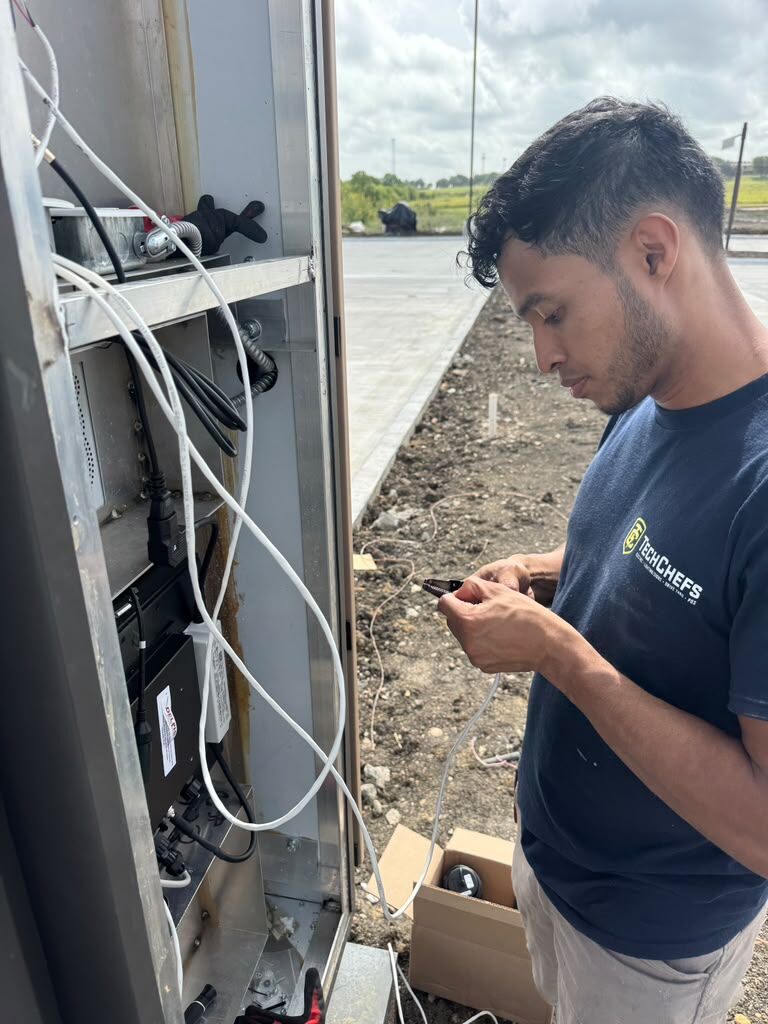
Drive-thru system repair covers a lot more than headsets. A drive-thru is a chain of parts — base station, headsets, the outdoor speaker and mic, the vehicle detection loop, the timer, and the cabling tying it together — and when orders stop flowing, the failure is in one link of that chain. Knowing which link saves you money and downtime. Here's how the system actually breaks, from most common to least.
The failure points, in order
- Batteries and headsets. The everyday stuff. If one headset acts up, it's the headset or its battery. If they all act up, keep reading — the problem is downstream.
- Outdoor speaker & microphone. The most weather-beaten part of the system. Texas heat, rain, and grease-laden exhaust kill order-point audio: distortion, low volume, customers who can't hear you or be heard.
- Vehicle detection loop. When the tone doesn't fire as a car pulls up — or fires when nothing's there — the loop in the pavement or its detector is failing. Loops fail with pavement cracking, water intrusion, and age.
- Base station. The brain. Faults here show up everywhere at once: all headsets crackling, registration drops, dead zones. Sometimes it's settings; sometimes it's hardware.
- Cabling & power. Chewed, waterlogged, or degraded cable between the building and the order point causes the "random" problems that come and go with weather. Clean power matters too — surges and shared circuits shorten equipment life.
- Timers. When your drive-thru timer stops reporting or misreads events, you're managing the line blind. Timer repairs range from sensor fixes to system replacement.
How a real diagnosis works
A tech who knows drive-thrus isolates the chain link by link: swap a known-good battery and headset first, test audio at the order point, check loop detection, then work back through the base station and cabling. That discipline matters because the most expensive mistake in drive-thru repair is replacing equipment that was never broken — new headsets won't fix a corroded speaker, and a new speaker won't fix a failing loop.
Repair vs. upgrade
If your system is current-generation, repair is almost always right — see how to decide fix vs. replace on a headset. If it's an aging platform with recurring failures and drying-up parts, put repair money toward a modern system instead — see our HME system comparison for where the line is. We'll tell you which side of it you're on; sometimes the honest answer is a $40 part.
One company for the whole chain
Most vendors can service the electronics or the electrical — not both. Tech Chefs does the full chain under one roof: audio systems, loops, timers, cabling, and the power feeding them, as an authorized HME dealer with licensed electricians (TECL 37276). Same-day drive-thru service across DFW, and genuine replacement parts shipped nationwide.
Drive-thru down? We roll same-day.
Full-system diagnosis and repair across DFW — audio, loops, timers, cabling, and power, one truck, one invoice.
📞 Call 972-901-9948