
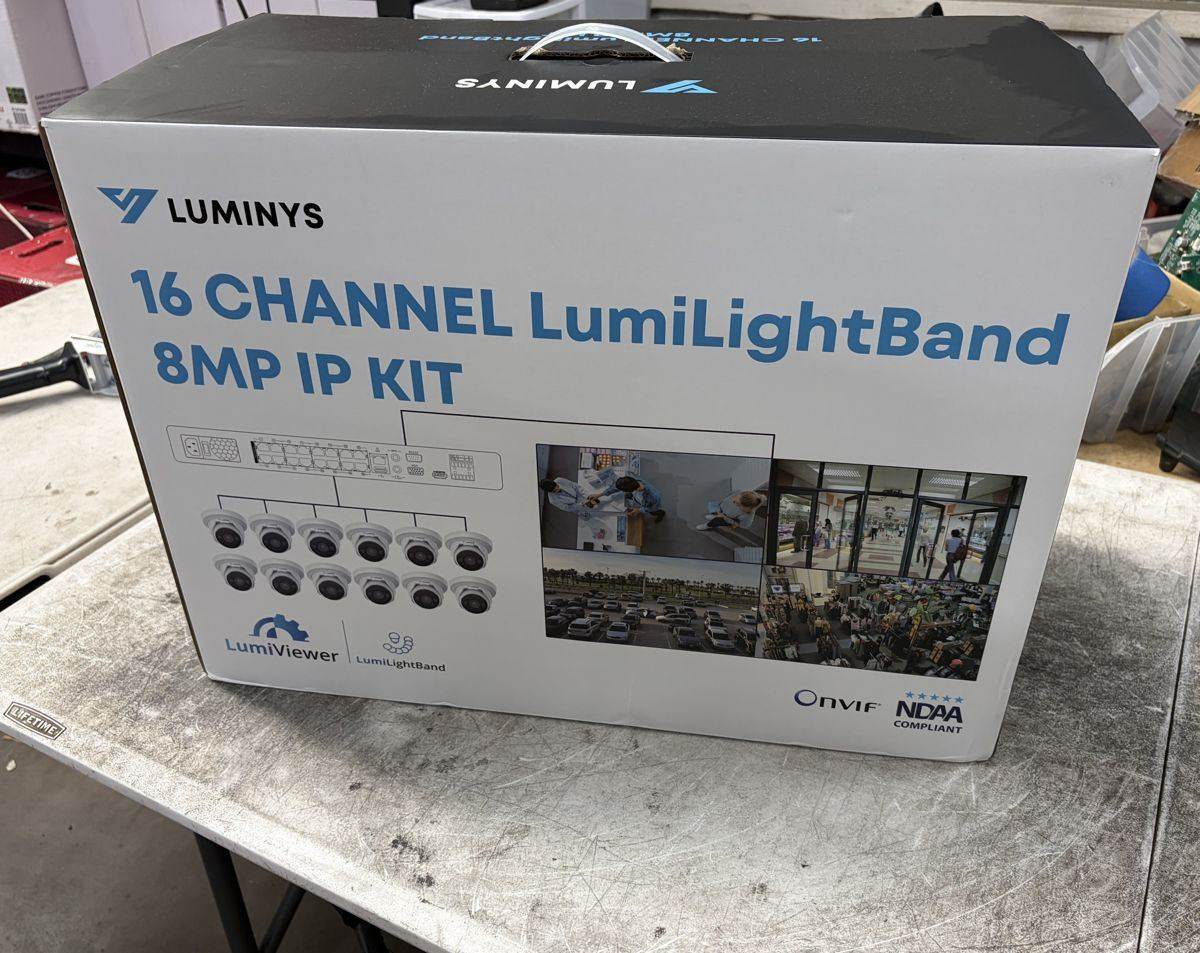
If you've shopped for commercial cameras, you've probably seen "NDAA-compliant" on the good ones — and nothing on the cheap ones. It's not marketing fluff. For a lot of businesses, it's the difference between a system you can legally keep and one you'll have to rip out. Here's the plain-English version.
What "NDAA-compliant" actually means
The National Defense Authorization Act (NDAA) — Section 889 — bans certain Chinese-made video surveillance equipment from being used by federal agencies, contractors, and organizations that receive federal funding. It specifically targets gear from a handful of manufacturers (and cameras built on their chipsets, even when sold under other brand names). A camera that avoids all of that is called "NDAA-compliant."
Does it apply to your business?
You're most likely required to use NDAA-compliant equipment if you:
- Hold or bid on federal contracts, or subcontract to anyone who does.
- Receive federal grants or funding (many schools, healthcare, transit, and nonprofit organizations do).
- Work with government or defense-adjacent clients who require it of their vendors.
Even if none of those apply today, they might tomorrow. A lot of private operators now specify NDAA-compliant gear simply because it future-proofs the investment and signals they take data security seriously — and because the banned brands raise real cybersecurity questions regardless of the law.
The hidden risk of non-compliant cameras
The cheap cameras on big online marketplaces are frequently built on banned chipsets — and it's often not disclosed. Businesses find out the hard way: during a contract audit, a security review, or after a client mandate, they're forced to replace an entire system they just paid to install. Buying compliant from the start is far cheaper than buying twice.
How to make sure your system qualifies
- Buy from a known, compliant manufacturer — not an anonymous marketplace listing.
- Get it in writing. Reputable dealers will confirm NDAA compliance for the specific models.
- Watch the whole chain — cameras, recorder (NVR), and modules all need to be clean, not just the cameras.
We install NDAA-compliant Luminys systems
Tech Chefs is an authorized Luminys dealer, and Luminys IP cameras and NVR kits are NDAA-compliant — legal for commercial and government-adjacent use, backed by warranty, and supported by the same licensed techs who install them. Browse cameras and kits in our parts store, or see our commercial security camera service for full design and installation. Not sure whether your current system is compliant? We'll take a look and tell you straight.
Need compliant cameras — or a check on what you've got?
We design and install NDAA-compliant Luminys camera systems across DFW, and we'll audit your existing setup for compliance. Straight answers, licensed crew.
📞 Call 972-901-9948